Carbonara found me in Rome on a Tuesday, in a trattoria with no menu posted outside and four tables inside. I had been walking for three hours. The bowl that arrived was the color of sunlight on plaster: pale gold, glossy, with a serious amount of black pepper sitting on top like punctuation. I ate it in silence. Not because I was being precious about it, but because there was nothing else to say.
What I remember most is what it was not. It was not heavy. It was not creamy in the dairy sense. It was not the gluey, egg-curdled approximation I had made at home for years and called close enough. It was silk that tasted like guanciale and egg yolk and aged cheese, in exactly that order. The pan that made it, I later noticed, was a battered carbon steel skillet, well-seasoned and wide. It mattered.
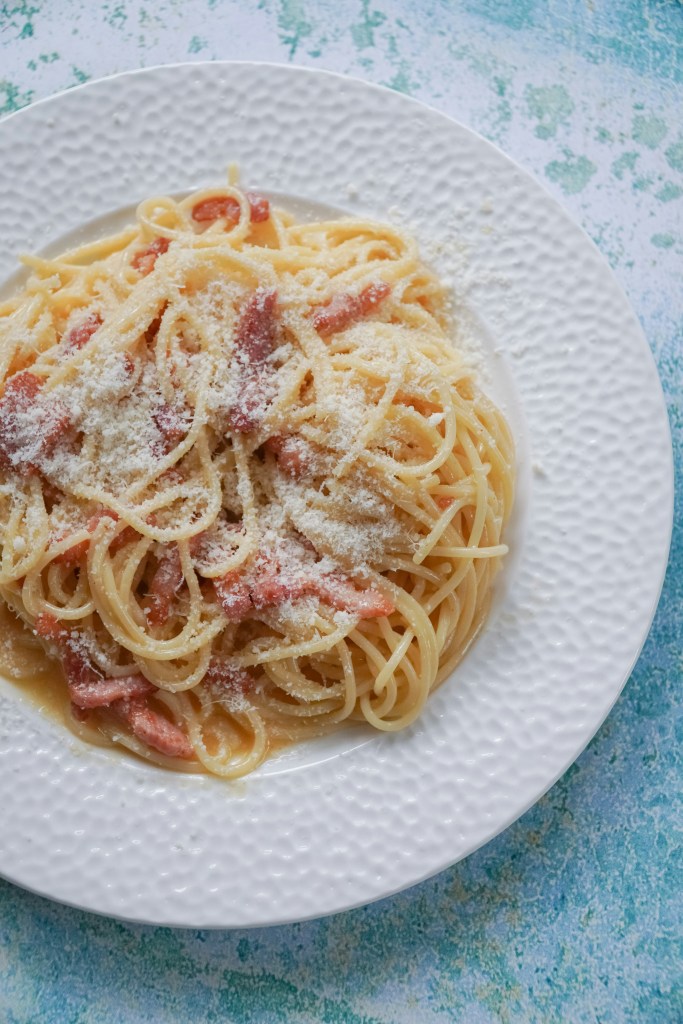
What Carbonara Actually Is
Carbonara is a Roman dish, and Roman cooks will tell you there are four ingredients: guanciale, Pecorino Romano, eggs, and black pepper. No cream. No garlic. No onion. The dish likely emerged in the mid-twentieth century, and its technique is specific enough that even small changes in heat or sequence produce something categorically different.
The challenge, the one that has ruined more home attempts than any substitution, is the eggs. Specifically: carbonara where the eggs don’t scramble is the benchmark of whether you understand what you are doing. The sauce is not cooked over direct heat. It is tempered off-heat, in the residual warmth of the pan, loosened with starchy pasta water, and coaxed into something emulsified and smooth. The window between raw and scrambled is real, and narrow, and entirely manageable once you understand the physics of it.
Ingredients and Sourcing
Guanciale is cured pork cheek, fattier and more delicate in flavor than pancetta. It renders differently: the fat goes translucent and soft rather than crispy, and that fat is what you want coating your pasta. Most good Italian delis carry it. If yours does not, pancetta is an honest substitution, not a betrayal.
Pecorino Romano is sharper and saltier than Parmigiano-Reggiano. Some cooks use a blend; I use all Pecorino and let it do its work. Buy it in a wedge and grate it fine on a Microplane, not on the large holes of a box grater. The texture matters for how it incorporates.
Eggs: use whole eggs plus additional yolks. I use one whole egg and three yolks for two servings. The extra yolks add richness and give the sauce more body without tipping into heaviness. Rigatoni is traditional in some Roman households; spaghetti or tonnarelli is equally correct. Use a pasta with some surface texture.
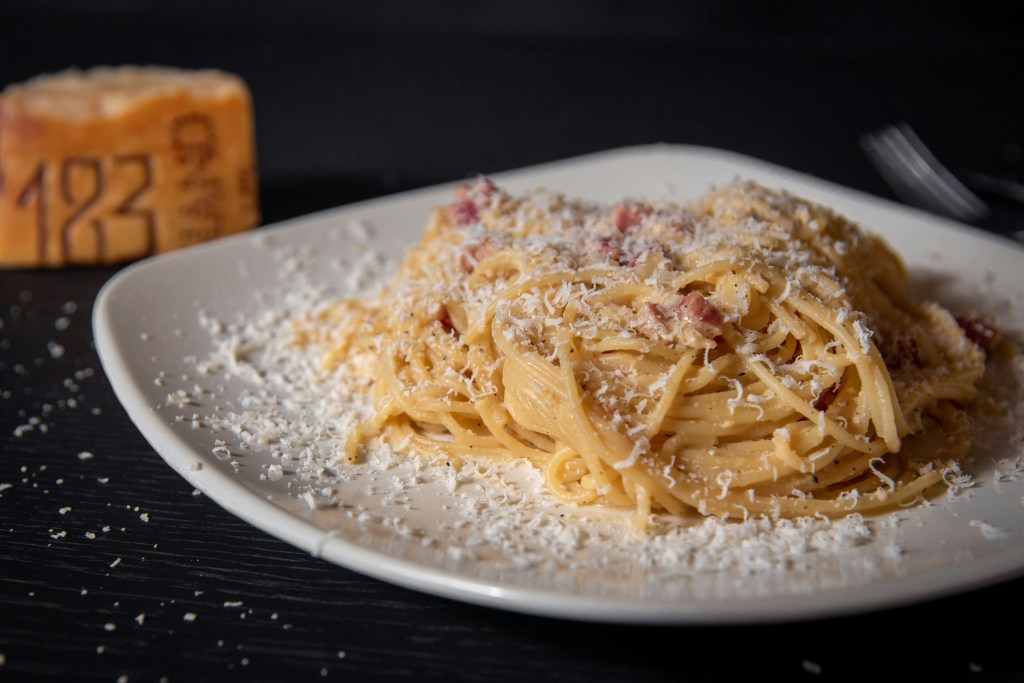
Cook’s Notes
The most common failure is a hot pan. If your guanciale is still sizzling when you add the egg mixture, you will have scrambled eggs with pasta. Let the pan rest for a full minute after you turn the heat off. When in doubt, pull the pan off the heat entirely and build the sauce in a bowl instead, using the pasta’s residual heat.
This dish does not reheat. Make it when people are at the table, not before. It takes six minutes from boiling pasta to plating; the prep happens beforehand.
One variation worth trying: a small amount of dry white wine added to the pan after the guanciale renders, cooked off before the pasta goes in. It adds a brightness that plays well against the fat. Not traditional. Not wrong.
The Pan Question
The pan is not incidental. A wide, heavy pan with good heat retention and no nonstick coating is what the technique requires. Nonstick surfaces cool too quickly and give you no visual cue about temperature. Carbon steel and stainless both work because they hold and release heat in ways you can read and manage.
What you want is width: enough surface that the pasta can toss freely and the sauce distributes evenly. A 12-inch pan is correct for two servings. A 10-inch will crowd things and make the tossing awkward.
I use a carbon steel skillet that I have had for six years. It is the right weight, the right size, and after enough seasoning, it has a surface that tells me exactly how hot it is by the way rendered fat moves across it. If you are looking for one, a well-seasoned carbon steel pan in the 10-to-12-inch range is the right category.
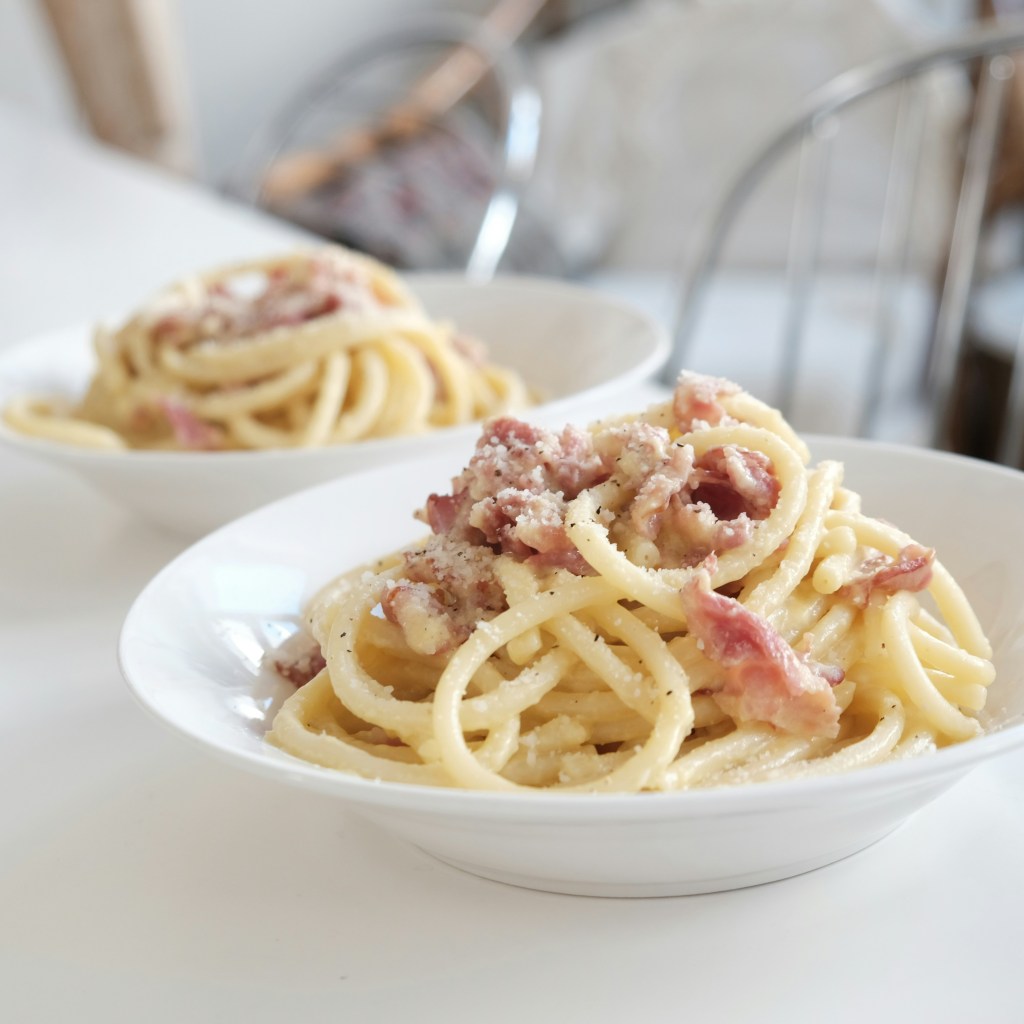
Carbonara is not a weekend project. It is not a dish you labor over. It is thirty minutes, four ingredients, and a technique that rewards attention. Make it on an ordinary night, with no audience, and get comfortable with the moment when the sauce either comes together or it does not. Once it does, once it goes glossy and silky and right, you will understand why every Roman cook knows it by feel rather than by recipe.

 Synnova Atelier
Leave a comment