It was New Year’s Eve and I had lined up five tins of caviar on the kitchen counter like a very serious person who had made a very questionable decision with their grocery budget. No party, no occasion beyond the date on the calendar. Just a set of small mother-of-pearl spoons, a bowl of crème fraîche I had no business putting on anything else that evening, and a genuine desire to understand what I was actually tasting when I tasted caviar. Knowing how to enjoy caviar properly, I had decided, required tasting it badly first, then tasting it again, then developing an opinion. That night I developed several.
What It Is, and Why the Differences Matter
Caviar is salt-cured fish roe, and for most of culinary history, that meant one thing: sturgeon. The three varieties you’ll encounter most seriously are Beluga, Osetra, and Sevruga, each from a different sturgeon species, each with a different character. Beluga is the largest egg, the mildest, the most buttery. Sevruga runs small, briny, sharp. Osetra sits in the middle, and if you ask me (or my New Year’s Eve counter), it wins.
What the side-by-side tasting taught me is that caviar isn’t a monolith. The pop of the egg, the salinity, the finish, the color variation even within a single tin, these are features, not accidents. They’re the result of the fish’s diet, its age at harvest, the malossol (low-salt) curing method, and the care of whoever processed it.
The reason most people don’t develop genuine taste for caviar is that they only ever have one kind, once, under pressure to enjoy it. Tasting them together removes all of that. You stop performing appreciation and start actually noticing things.
The Technique: How to Serve It Right
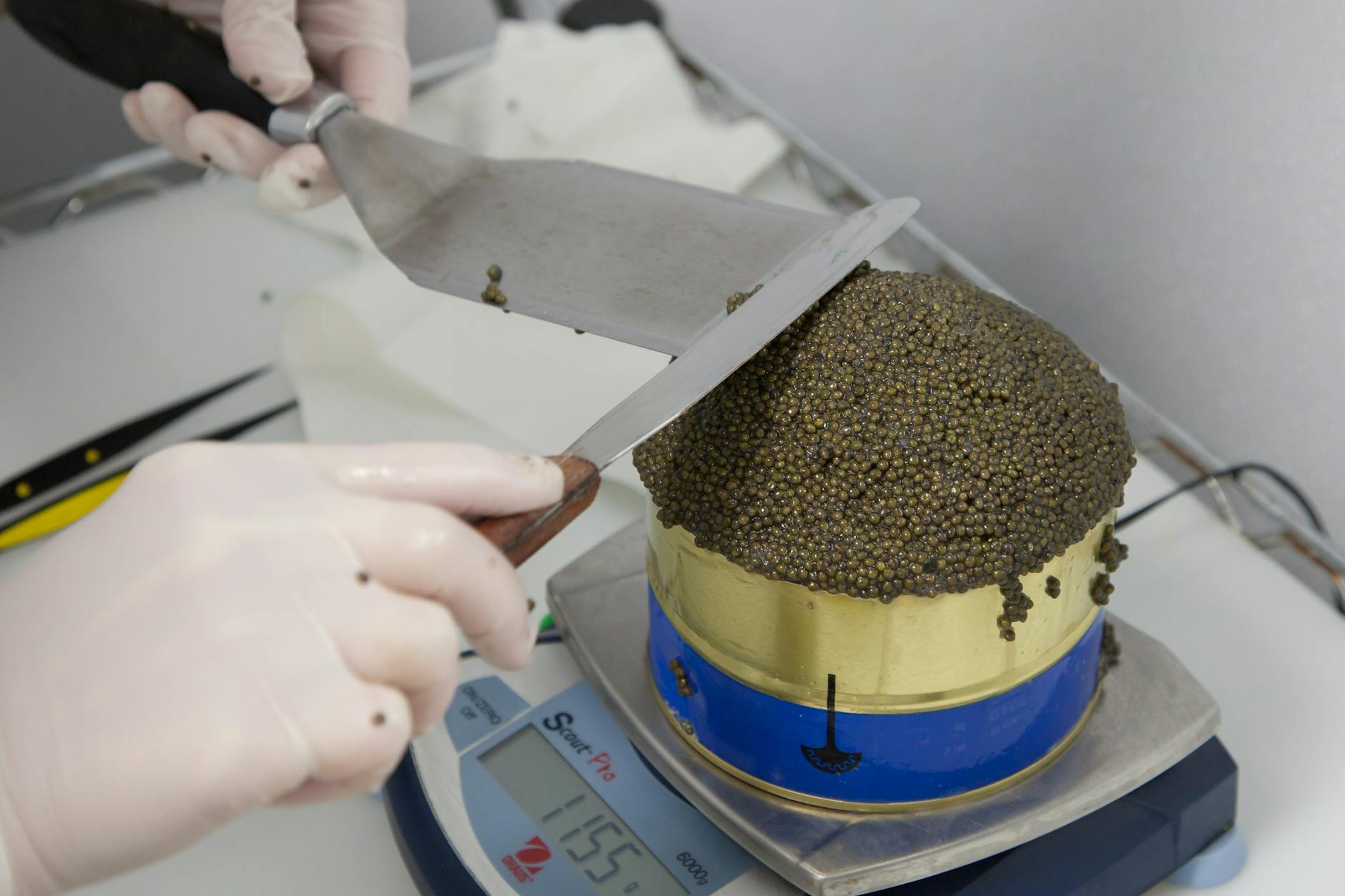
The most important rule of serving caviar is temperature. The tin should be cold, ideally nestled in crushed ice, and it should come out of the refrigerator no more than fifteen minutes before you serve it. Any longer and the eggs begin to lose tension. You want that pop. You’re serving the pop as much as the flavor.
Use a mother-of-pearl spoon, a bone spoon, or the back of your hand. Metal spoons, even briefly, introduce a metallic oxidation that flattens the flavor. This is not affectation. I tested it by accident on New Year’s Eve when I reached for a teaspoon. The difference is real.
The bump, which is the practice of placing caviar directly on the back of your hand between thumb and forefinger and eating it from there, exists because your skin warms the eggs just slightly and you taste them without any other flavor competing. It’s also the most efficient way to understand what you’re actually tasting before you add any accompaniment. Do this first. Form a quick opinion. Then add the crème fraîche, the blini, the potato chip, or (if you’re following where social media has been heading lately) the McNugget.
The caviar bump became a kind of cultural shorthand this past year when people started pairing fine roe with McDonald’s Chicken McNuggets, a combination that went widely viral and, genuinely, makes sense. The fat in the breading softens the salinity and the contrast is deliberate and fun. It’s not a gimmick if the flavors work, and they do.
Common mistake: piling it. Caviar is not a topping. A small, considered amount on a neutral base lets you taste it. More is not more.
What to Make With It
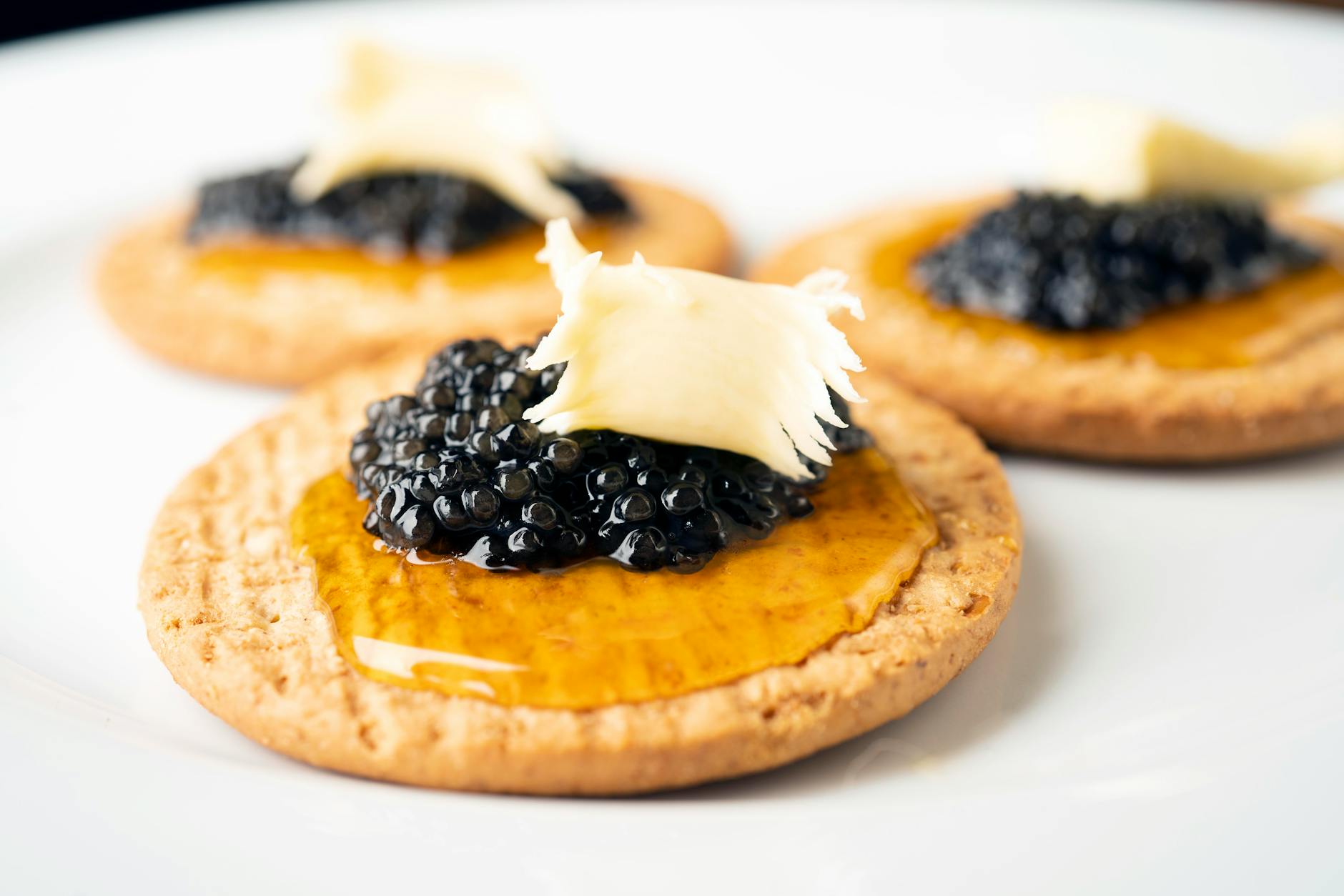
Caviar on Crème Fraîche Blini
The classic exists for a reason. Small buckwheat blini, just barely warm, with a spoonful of cold crème fraîche and a restrained amount of Osetra or Sevruga on top. The tang of the crème fraîche, the nuttiness of the buckwheat, the salt and pop of the roe. This is the version to make if you’re serving guests and want them to understand what caviar is. Keep the blini small, around two bites, so the ratio holds.
Caviar on a Kettle Chip
This is where the viral caviar-on-fast-food moment actually has culinary logic behind it. A plain, thick kettle chip (salted, not flavored) provides fat, crunch, and neutral starch. A small amount of crème fraîche or sour cream, a few eggs, done. The chip holds up longer than a blini and costs nothing. This is the version I make at home when I’m not performing a tasting and just want to enjoy what I bought.
Caviar with Scrambled Eggs
Soft, slow-scrambled eggs, barely set, finished off the heat with a small amount of butter and a quiet amount of crème fraîche. Let them cool for thirty seconds before adding the caviar. Heat destroys the eggs and dulls the flavor. You’re spooning the caviar over something warm, not cooking it. This combination, eggs on eggs, is one of the most considered things you can make in under ten minutes.
What to Buy and Where to Source
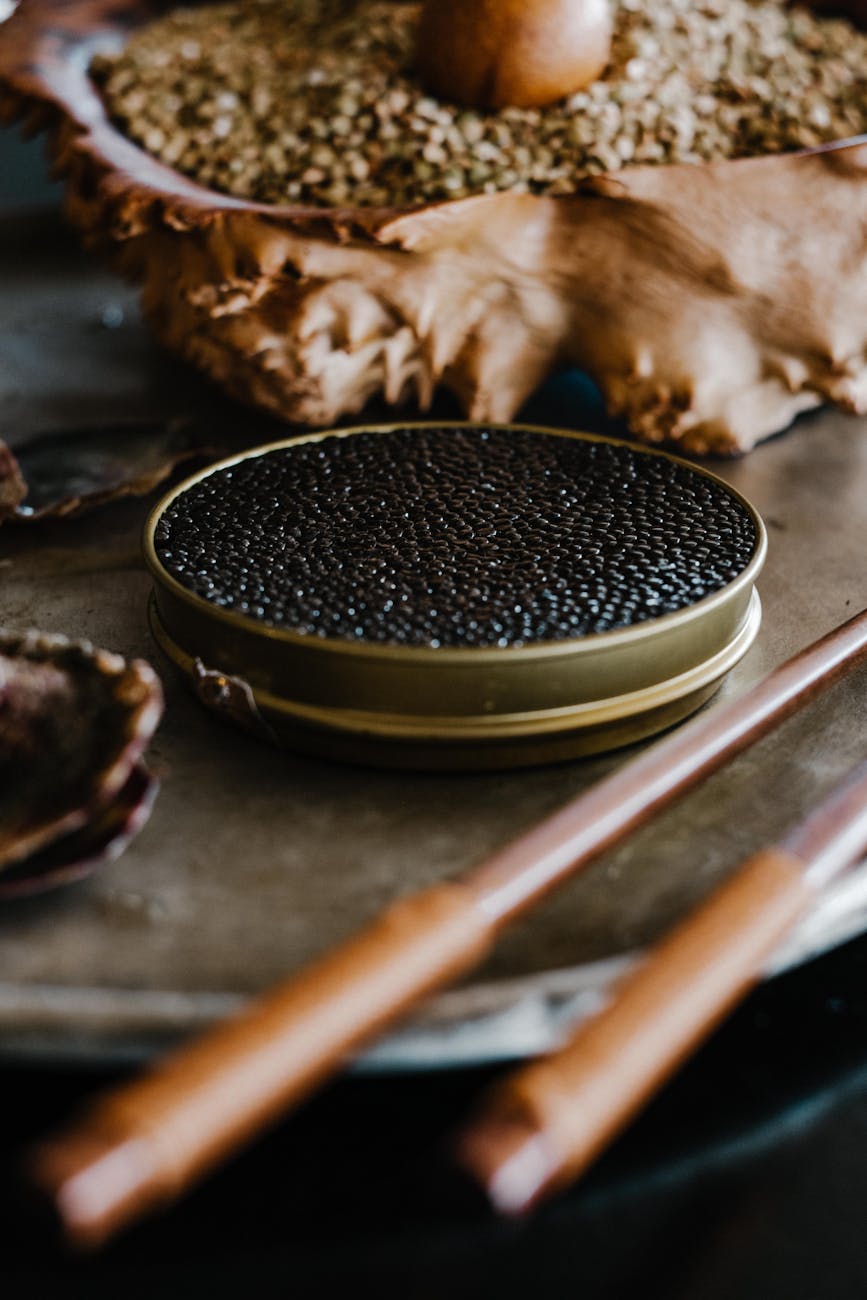
For entry-level exploration, American Paddlefish roe and hackleback sturgeon roe from domestic producers offer genuine caviar character without the price of imported. They’re honest products and a good place to start.
At mid level, Royal Osetra from Regalis Foods and comparable offerings from Browne Trading are consistently well-processed and fairly priced for the quality. These are the tins I’d put on a New Year’s Eve counter.
At premium, Petrossian Paris and Caviar Russe both source exceptional Osetra and Beluga-alternative (Kaluga hybrid) products with reliable provenance. If you’re buying for a specific occasion, buy here.
All of these ship on ice. Order two days before you need them. Don’t push your luck on overnight shipping in summer.
Buy three tins sometime. Not five, three. Get a variety across price and species, lay out the spoons, and taste them in order from mildest to most assertive. You’ll have an opinion by tin two. By tin three, you’ll understand why Osetra, with its firm pop and savory, almost nutty finish, keeps winning. That’s how you learn caviar. Not from a guide. From your own counter.

 Synnova Atelier
Leave a comment